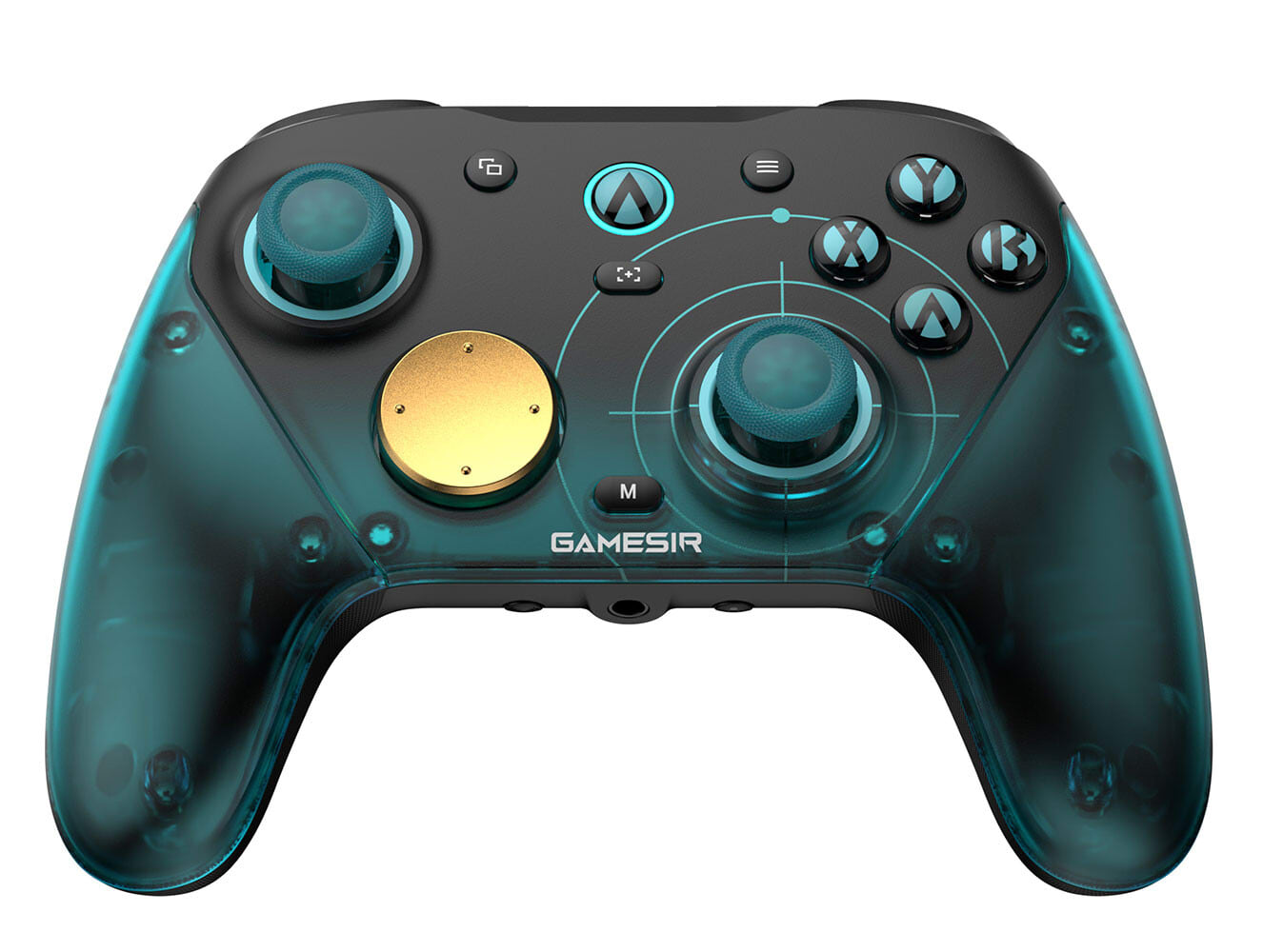
Both TMR and Hall effect joysticks are magnetic, contactless, and immune to the wear that causes stick drift. TMR is the newer of the two and measures the direction of a magnetic field rather than its strength, which yields a stronger raw signal, lower jitter, and roughly five times less current draw.
The honest answer to "which is better" is that TMR is the better sensor and Hall effect is the better value. Neither will ever drift the way the potentiometer sticks in an Xbox or DualSense controller do, because neither has a wiper scraping across a resistive track. Everything past that point is a question of precision you may or may not be able to feel.
Note
Key Takeaways
- Both are drift-proof. Neither uses physical contact, so neither wears out the way potentiometers do.
- TMR outputs a much stronger signal — Hall effect sensors produce microvolt-level output that needs amplification, and amplification adds noise.
- TMR draws 0.1-0.3mA versus 0.5-2mA for a linear Hall sensor, which matters for wireless battery life.
- TMR handles stray magnetic fields better, which is why it suits controllers packed with haptics and speaker magnets.
- No first-party console controller ships with either technology. This is still a third-party and mod-kit market.
Why Standard Controllers Drift in the First Place
Almost every stock controller from Microsoft, Sony, and Nintendo uses a potentiometer stick: a small carbon track with a metal wiper dragging across it. Stick position is read as electrical resistance at the point of contact.
That contact is the whole problem. The wiper physically abrades the track, carbon dust accumulates in the housing, and the resistance the controller reads at "centre" slowly stops matching true centre. The controller then reports movement that your thumb is not making. That is stick drift, and it is a wear-out failure, not a bug — our guide to fixing controller stick drift covers the cleaning and recalibration steps that buy a worn stick more time.
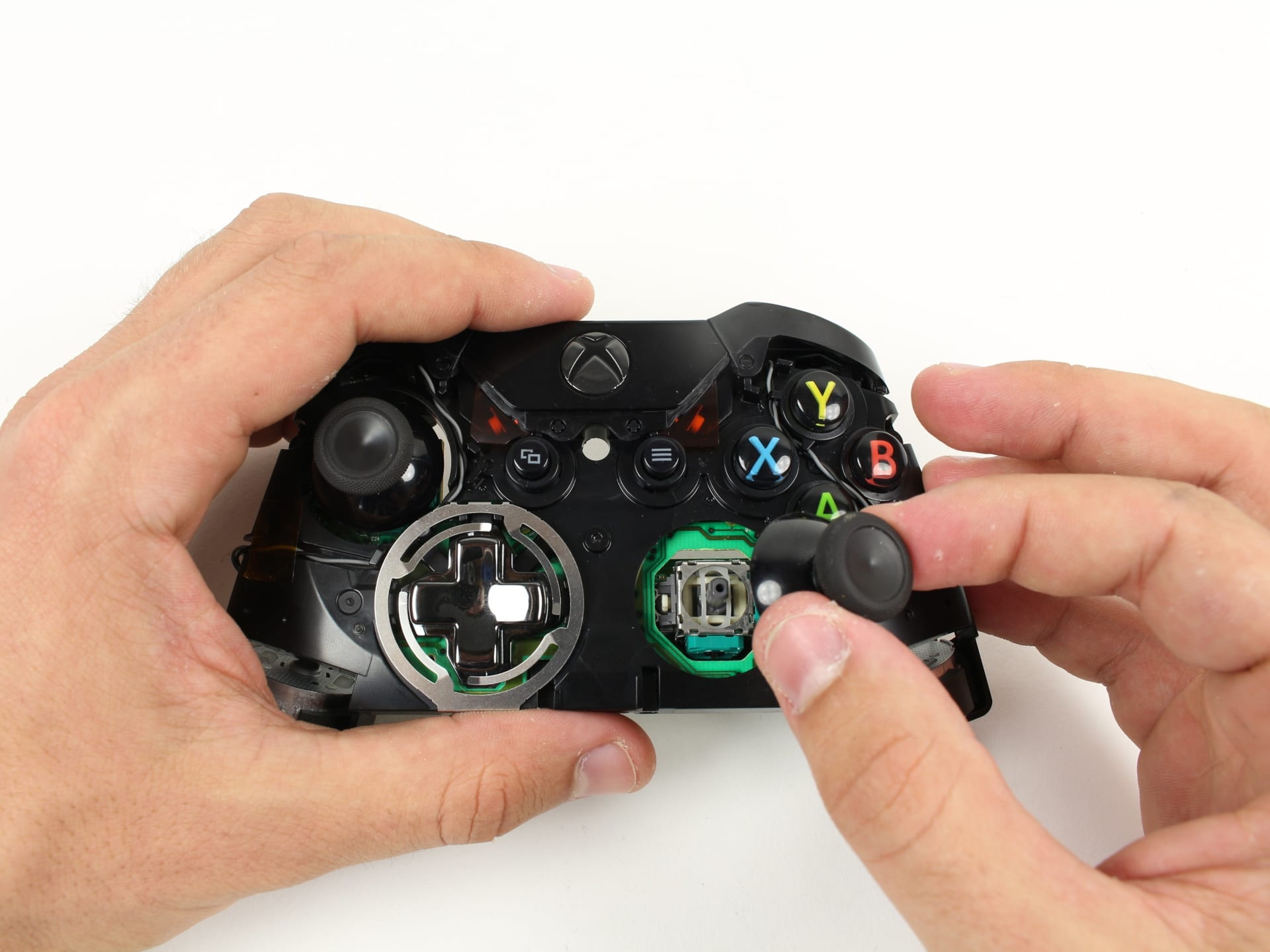
Magnetic sensing removes the contact entirely. A magnet sits on the stick shaft, a sensor sits below it on the board, and nothing touches anything. There is no track to wear through, so there is no drift mechanism.
How Hall Effect Sensors Work
A Hall effect sensor measures field strength. Current runs through a thin conductive plate; when a magnetic field passes through it, the electrons deflect to one side and produce a small voltage across the plate. Move the magnet, change the field, change the voltage, read the stick position.
The catch is scale. That output is measured in microvolts, so every Hall effect stick needs an amplifier stage before the controller can do anything useful with the reading. Amplifying a tiny signal also amplifies whatever noise rode along with it, which is where jitter and larger dead zones come from.
Hall effect has been shipping in third-party controllers since roughly 2022 and is now the mainstream drift-free option. It works, it is well understood, and it is cheap.

How TMR Sensors Work
TMR stands for tunnel magnetoresistance, and the physics is genuinely different rather than a marketing refinement.
A TMR sensor is a sandwich: two magnetic layers separated by an insulating barrier of magnesium oxide only one to two nanometres thick. Electrons quantum-tunnel through that barrier, and how easily they do so depends on whether the magnetic orientation of the two layers is aligned. Rotate the field, change the resistance, read the position.
If magnetic sensing sounds familiar from elsewhere on your desk, it should — the same Hall effect principle underpins the analogue keyboards we cover in magnetic keyboard switches versus mechanical switches, where it enables adjustable actuation for exactly the same reason it enables adjustable dead zones here.
Two consequences follow, and both matter:
The signal is far stronger. TMR measures resistance change across a junction rather than a microvolt-scale deflection voltage, so the raw output is orders of magnitude larger than a Hall sensor's. Less amplification means less amplified noise.
It reads direction, not magnitude. Because TMR responds to field orientation, it is much less confused by a stray magnet sitting nearby — and a modern controller is full of them, between rumble motors, speakers, and trigger haptics.
Tip
If a controller advertises "magnetic sticks" without saying which kind, assume Hall effect. TMR is the newer and more expensive part, and manufacturers who pay for it put "TMR" in the product name every time.
TMR vs Hall Effect: The Direct Comparison
| # | Property | Hall Effect | TMR |
|---|---|---|---|
| 1 | Measures | Magnetic field strength | Magnetic field direction |
| 2 | Raw signal output | Microvolts, needs amplification | Much stronger, less amplification |
| 3 | Current draw | 0.5-2mA | 0.1-0.3mA |
| 4 | Jitter / noise floor | Low | Lower |
| 5 | Minimum usable dead zone | Small | Smaller |
| 6 | Stray-magnet immunity | Moderate | Strong |
| 7 | Drift over time | None | None |
| 8 | Typical price premium | Modest | Higher |
Row 7 is the row most buyers actually care about, and it is a tie. If your only goal is never dealing with drift again, Hall effect solves your problem completely and costs less.
Where the Difference Shows Up
Competitive FPS Players
Fine aim adjustments at low stick deflection are exactly where a lower noise floor is perceptible. Smaller dead zones mean micro-corrections register instead of being filtered out.
Flight and Racing Sims
Long, slow, held inputs expose sensor drift-under-temperature. TMR readings stay more consistent as the controller warms up over a session.
Wireless Users
The power difference is small in absolute terms but real. Over a very long session it translates to a few extra minutes rather than hours.
Everyone Else
In a third-person action game or a platformer, a well-implemented Hall effect stick is indistinguishable from TMR in normal play.
That last card is the one to be honest about. TMR is measurably better on a bench. Whether it is perceptibly better depends entirely on whether your game rewards sub-degree stick precision.
What You Can Actually Buy
As of 2026, no first-party console controller from Microsoft, Sony, or Nintendo ships with Hall effect or TMR sticks. This remains a third-party and repair-kit market, which is worth knowing before you go looking.
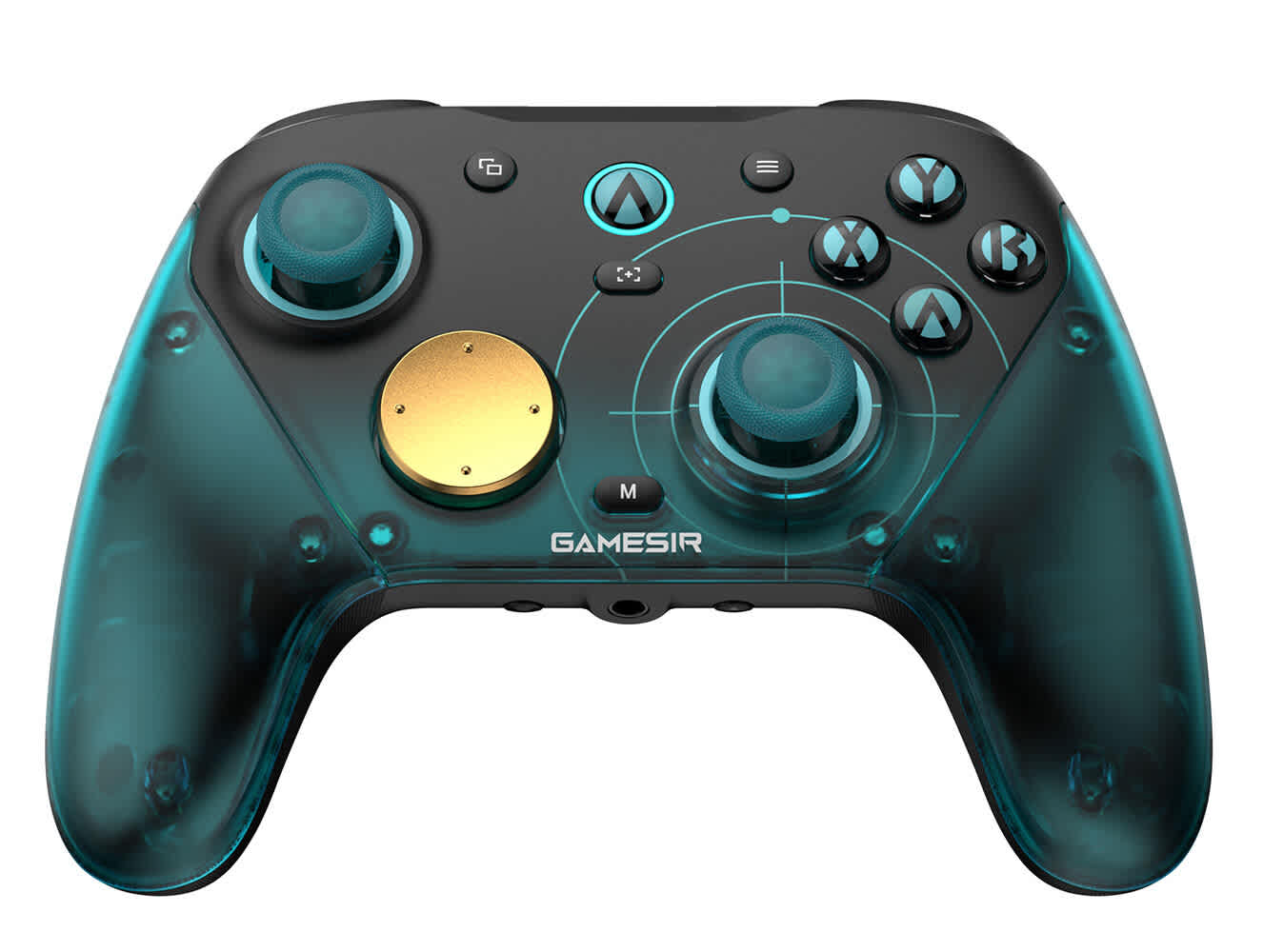
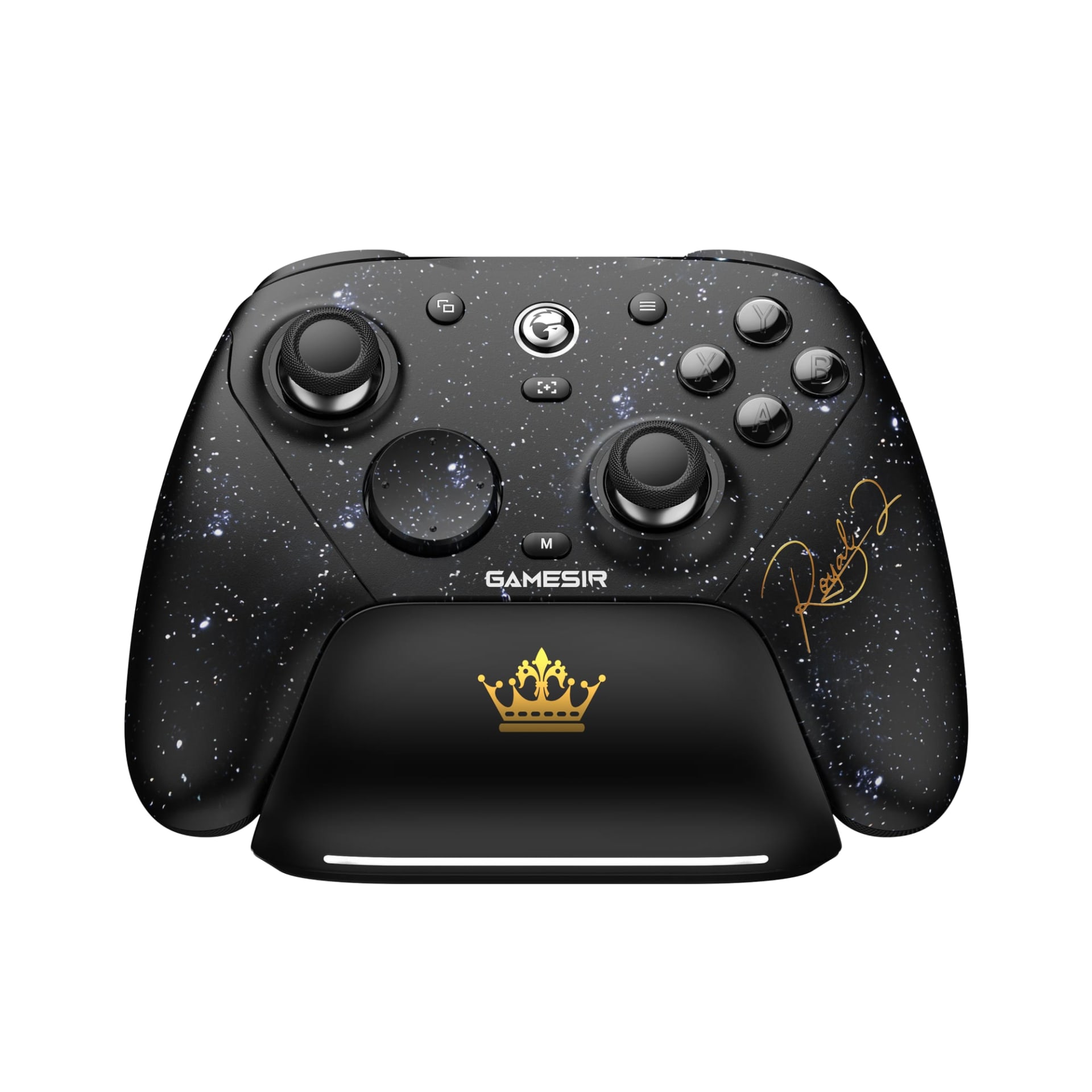
Third-party pads from GameSir, GuliKit, and 8BitDo now ship TMR sticks in their flagship models — GameSir's G7 Pro line pairs TMR thumbsticks with Hall effect triggers, which is a sensible split since triggers do not need the same precision. Several of those models also chase very high polling rates, and it is worth reading our breakdown of whether 8000Hz polling is worth it before paying extra for that particular number.

The other route is a replacement module. GuliKit and others sell drop-in magnetic stick assemblies for Xbox, DualSense, Switch Joy-Con, Steam Deck, and ROG Ally, typically in the $20-30 range per pair. This is a soldering job on most controllers, so factor in either the skill or the repair-shop fee.
Warning
A magnetic stick does not fix a drifting controller on its own. If your existing pad drifts, replacing the sensor is a hardware repair, not a setting. And if the controller drifts because the analogue reading is fine but the firmware calibration is wrong, swapping modules changes nothing — recalibrate first and confirm the fault is mechanical before you buy parts.
Should You Pay the TMR Premium?
Work through it in this order:
| # | Your situation | Recommendation |
|---|---|---|
| 1 | Current controller drifts, casual player | Hall effect controller or module |
| 2 | Ranked FPS on controller | TMR is worth the premium |
| 3 | Sim racing or flight, long sessions | TMR for thermal consistency |
| 4 | Wireless, care about battery | TMR, marginally |
| 5 | Buying a spare or a couch co-op pad | Hall effect, save the money |
| 6 | Already own a good Hall effect controller | Do not upgrade — you will not feel it |
Row 6 deserves emphasis. Going from potentiometer to magnetic is a transformative upgrade. Going from Hall effect to TMR is a refinement, and paying full price again for a refinement is rarely the best use of the money — the same money spent on the display side, per our HDMI versus DisplayPort comparison, usually changes more about how a game feels.
The Input-Latency Caveat
One thing neither sensor fixes: the stick is rarely the slow part of your input chain. Polling interval, wireless link, frame pacing, and display latency all sit between your thumb and the screen, and each of them is typically a larger contributor than sensor resolution.
If a game feels unresponsive rather than imprecise, the sensor is the wrong thing to investigate. Frame delivery consistency is usually the culprit, and our explainer on what 1% lows are and why average FPS lies is the right place to start. A pad that reports position perfectly still feels bad if the frames arrive unevenly.
Frequently Asked Questions
Do TMR joysticks drift?
No. Like Hall effect sticks, TMR sticks sense the position of a magnet without any physical contact, so there is no wiper and no resistive track to wear down. The mechanism that causes drift in potentiometer sticks does not exist in either technology. A TMR stick can still fail from a broken solder joint or a cracked housing, but it will not develop drift from normal use.
Is TMR actually better than Hall effect, or is it marketing?
It is genuinely better on measurable properties. TMR produces a much stronger raw signal than a Hall sensor's microvolt-level output, needs less amplification, and therefore has a lower noise floor and supports smaller dead zones. It also draws 0.1-0.3mA against 0.5-2mA and resists interference from the other magnets inside a controller. Whether you can feel those differences in your games is a separate question.
Which controllers have TMR sticks?
TMR is a third-party feature — no first-party Xbox, PlayStation, or Nintendo controller ships with it. Flagship pads from GameSir, GuliKit, and 8BitDo now include TMR thumbsticks, and GuliKit also sells replacement TMR and Hall effect modules for Xbox, DualSense, Joy-Con, Steam Deck, and ROG Ally controllers in the $20-30 range.
Can I upgrade my existing controller to magnetic sticks?
Yes, using a drop-in replacement module, but it is a soldering job on most controllers rather than a plug-in swap. Before buying parts, recalibrate the controller and confirm the drift is mechanical — if the analogue reading is healthy and only the calibration is off, new modules will not change anything.
Does a TMR stick reduce input lag?
Barely, and not in a way you will notice. Sensor read time is a tiny fraction of the total path from thumb to screen compared with polling interval, wireless transmission, render time, and display latency. If a game feels sluggish rather than imprecise, the problem is almost certainly frame delivery or display latency, not the joystick sensor.
The Bottom Line
Buy Hall effect if you want to stop replacing drifting controllers. Buy TMR if you play competitively enough that a smaller dead zone and a lower noise floor will change your aim.
What you should not do is treat TMR as a required upgrade over a Hall effect pad you already own. The meaningful jump is from contact sensing to magnetic sensing; everything after that is refinement, and refinement is worth paying for only when the thing being refined is already your limiting factor.
This page is the buying decision. If you want the underlying physics instead — why a TMR junction swings 100-200% resistance where AMR manages 2-3%, and where each sensor family is used outside controllers — that is covered in Hall effect vs TMR vs AMR sensors.
Product and teardown photography courtesy of the respective manufacturers and repair publications, used for editorial coverage.
Sources
- iFixit, TMI About TMR, retrieved 2026-07-28, https://www.ifixit.com/News/115707/tmi-about-tmr
- BGR, Hall Effect Vs. TMR Controllers: What's The Difference?, retrieved 2026-07-28, https://www.bgr.com/2167212/hall-effect-vs-tmr-controllers-differences-explained/
- Game Rant, TMR vs Hall Effect Joysticks Explained, retrieved 2026-07-28, https://gamerant.com/tmr-vs-hall-effect-joysticks-explained/
- Notebookcheck, GameSir unveils G7 Pro 8K Aimlabs Edition with second-gen TMR sticks, retrieved 2026-07-28, https://www.notebookcheck.net/GameSir-unveils-G7-Pro-8K-Aimlabs-Edition-with-8000Hz-polling-rate-and-second-gen-TMR-sticks.1199586.0.html
- HL Planet, TMR Controllers List, retrieved 2026-07-28, https://www.hlplanet.com/tmr-controllers-list/