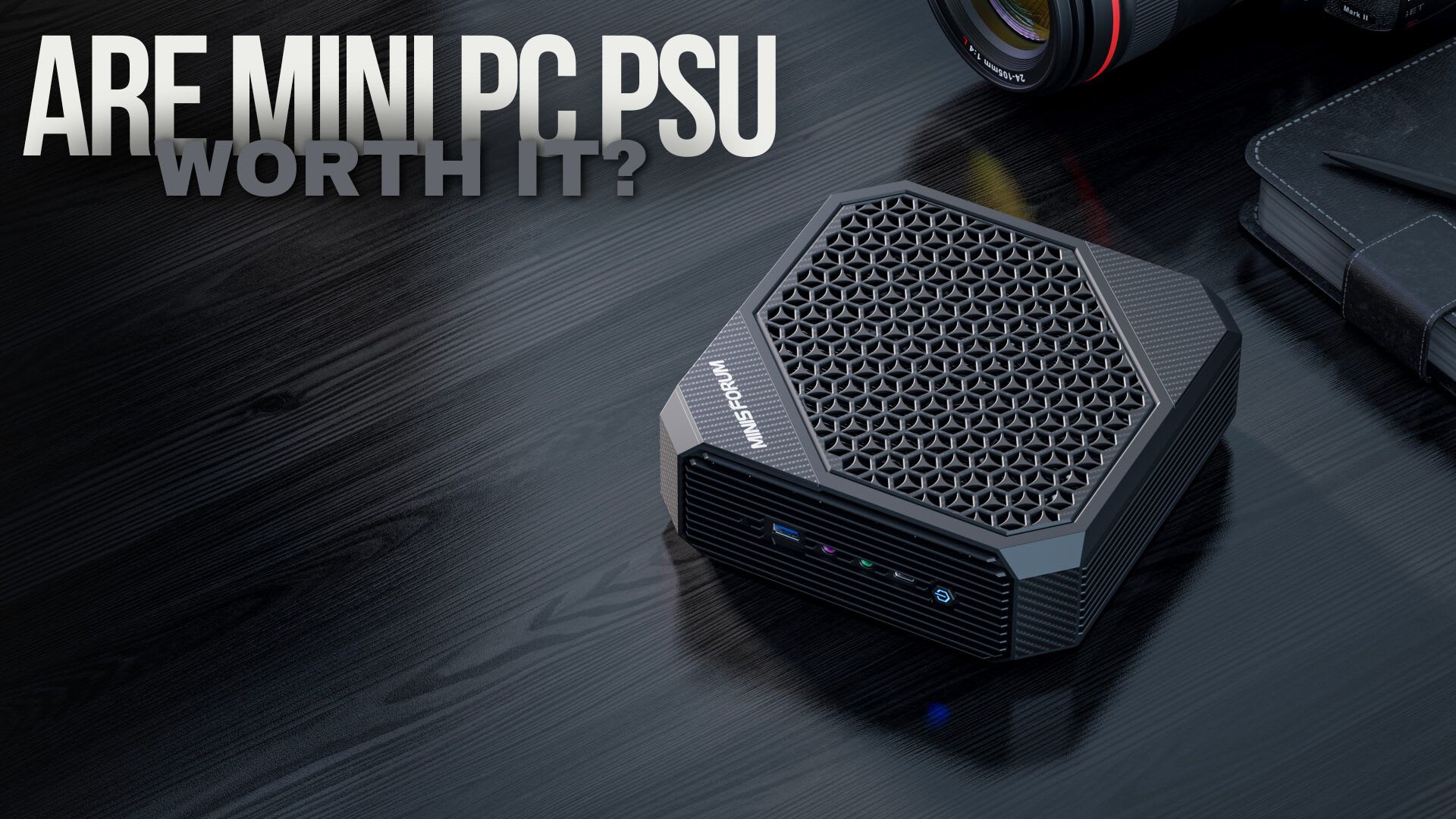
Yes, in most cases, mini PC power supplies are more than capable of delivering reliable and efficient power for compact systems. Designed specifically for small form factor (SFF) builds, these power supplies are engineered to provide sufficient wattage and stable performance while maintaining a smaller footprint. As long as the power supply matches the system’s power requirements and comes from a reputable manufacturer, it can handle everything from basic computing tasks to more demanding workloads. To answer this thoroughly, we compared every type of PSU commonly used in mini PCs - reviewing manufacturer specifications, efficiency ratings, physical dimensions, and compatibility - to lay the options side by side.
Note
Key Takeaways
- Mini PC PSUs are adequate provided the wattage matches the system and the unit comes from a reputable manufacturer.
- External power bricks dominate the smallest systems, moving heat and bulk outside the chassis at the cost of a desk-side adapter.
- SFX and Flex ATX are the internal formats. SFX is the more common and better supported of the two.
- 80 PLUS ratings still apply, and efficiency matters more in a small chassis because waste heat has nowhere to go.
- Headroom is the usual mistake. Sizing a small-form-factor PSU with no margin leaves nothing for transient GPU spikes.
All Types of Mini PC Power Supplies
There are different types of compact PSUs commonly used in Mini computers. PSUs vary in both functionality and size. Here is a detailed examination of various PSUs and their tradeoffs.
External PSU
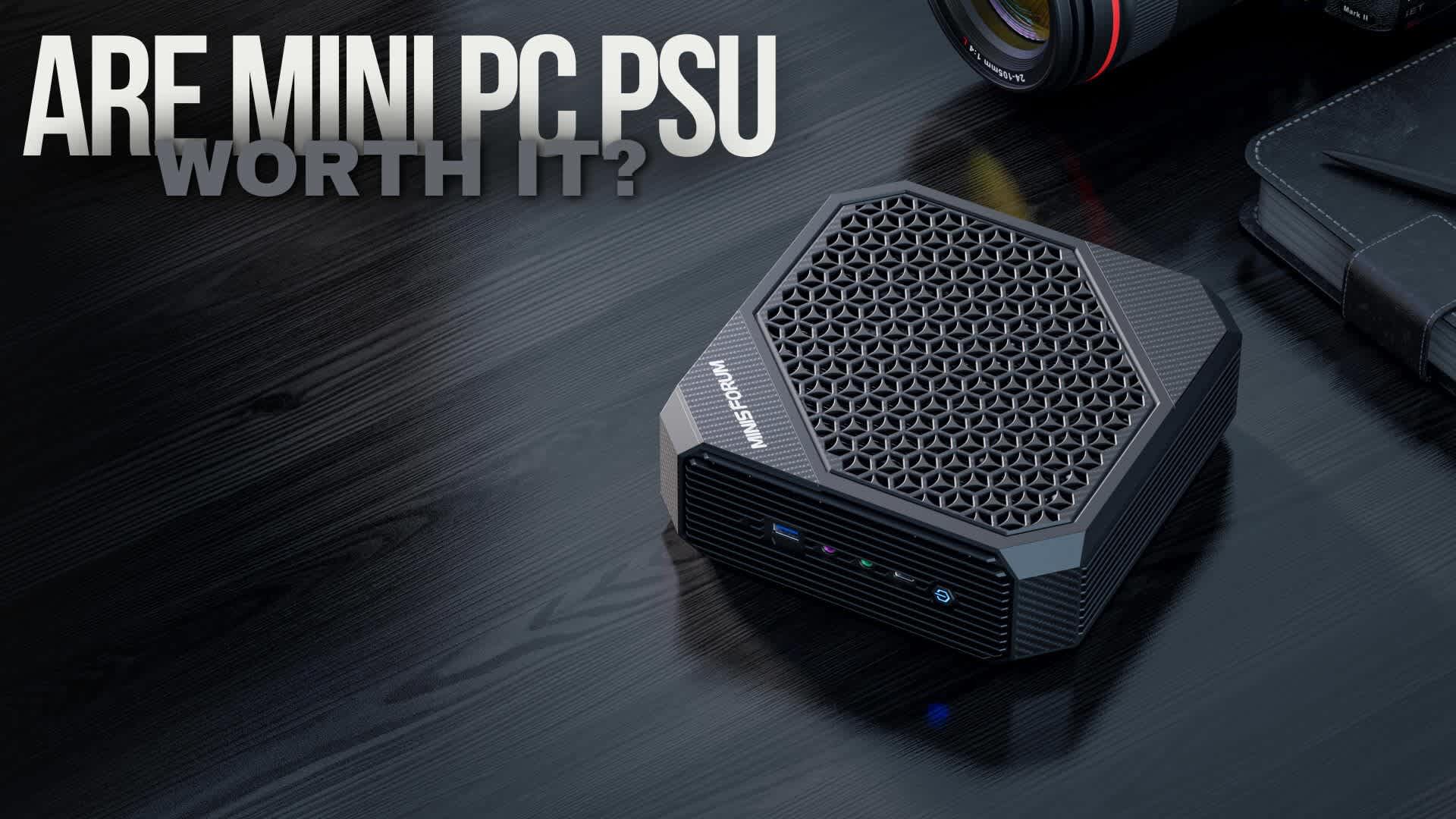
These types of PSUs reduce heat, save space, and suit compact builds (like mini pc) with low power demands. This setup is called an external power supply.
Power Adaptor
- A power adaptor is a device that converts electrical power from one form to another, typically from AC (alternating current) to DC (direct current), to power a mini computer or other electronic devices.
- Power adaptors are commonly used in compact systems to save space by eliminating the need for an internal power supply unit (PSU), while maintaining portability and flexibility for different setups.
Note
They usually range from 60W to 120W, which is suitable for most lightweight Mini PCs.
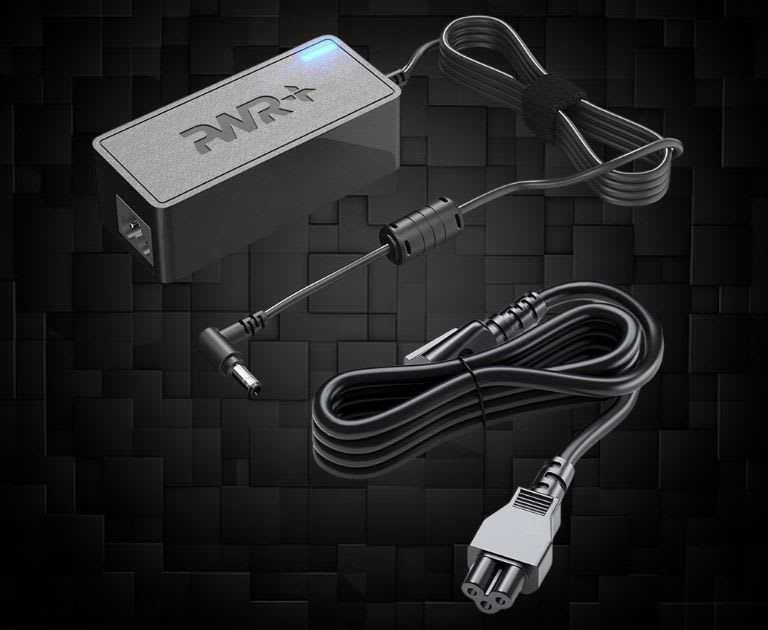
Advantages of Power Adapter PSU
- If the external power supply fails, it can be easily swapped out without requiring system tear down
- Due to its location outside the system, it is very helpful in reducing the heat build up within the system
- An external power supply can be used with multiple devices that have the same power requirements, making it a versatile and convenient option.
Disadvantages of Power Adapter PSU
- External power supplies may not be suitable for high power system because it typically offers limited power output
- If the adaptor of the external power supplier gets damaged then the PSU will not work.
- Although it reduces the size of the mini computer, it still requires space for adapter and cables.
Integrated PSU
A mini PC with an integrated PSU has the power supply built inside the case. They are in different sizes.
Compact Power Supply
- A compact power supply is a small-sized unit designed to deliver stable and efficient power to mini computers and small form factor systems.
- It’s perfect for tight spaces, helping maintain a clean and organized setup without sacrificing performance or reliability.
- Despite their smaller size, compact power supplies can offer impressive wattage, silent operation, and high energy efficiency, often matching or even exceeding the performance of standard-sized PSUs.
Note
Proper airflow and thermal management are also crucial to prevent overheating in these smaller form factors.
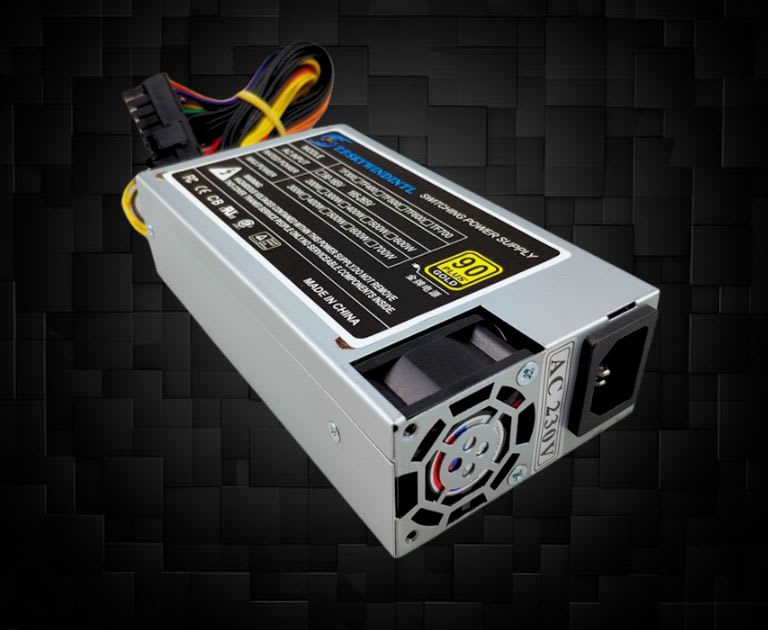
Pros of Compact Power Supply
- Compact internal power supplies fit perfectly into small form factor systems, ideal for compact builds.
- Compact power supplies often have high efficiency ratings and reducing energy consumption.
- Compact power supplies are reliable and durable, featuring various voltage protections.
Cons of Compact Power Supply
- It typically offers lower power output.
- Compact power supplies may not be upgradable which lowers the systems customisation and upgradability.
- They can also be prone to overheating if the system is not properly ventilated.
Pico PSU
- A Pico PSU is an ultra-compact power supply unit designed for small form factor (SFF) and mini PC builds.
- Despite its small size, it delivers efficient and stable power, typically ranging from 60W to 160W, depending on the model. Pico PSUs are highly popular in custom, low-power systems such as home theater PCs (HTPCs) and embedded applications due to their ability to provide reliable power without taking up much space.
Note
These power supplies are typically used in combination with an external 12V adapter.

Positive Aspects of Pico PSU
- Designed to be extremely small and compact making them ideal for mini computers.
- Suitable for low power systems because of their high energy efficiency ratings.
- Has features like over voltage protection under voltage protection and short circuit protection.
Negative Aspects of Pico PSU
- Typically requires a DC input voltage which can limit their compatibility with certain systems.
- Have limited power output which may not be suitable for high power systems.
- May not be upgradable or may have limited upgrade options.
Tip
Based on hands-on testing, Respawno found that Pico PSUs performed best in fanless HTPC setups.
Modular Power Supply
- A modular power supply allows users to connect only the cables they need, reducing cable clutter and improving airflow within a PC case.
- This flexibility makes it ideal for custom builds, particularly in smaller or more compact systems, where space and organization are crucial.
- Modular PSUs can be more efficient than non-modular ones since you can avoid unnecessary cables that may obstruct airflow or take up additional space.
Note
While typically more expensive than non-modular options, their customization and neatness often outweigh the extra cost.
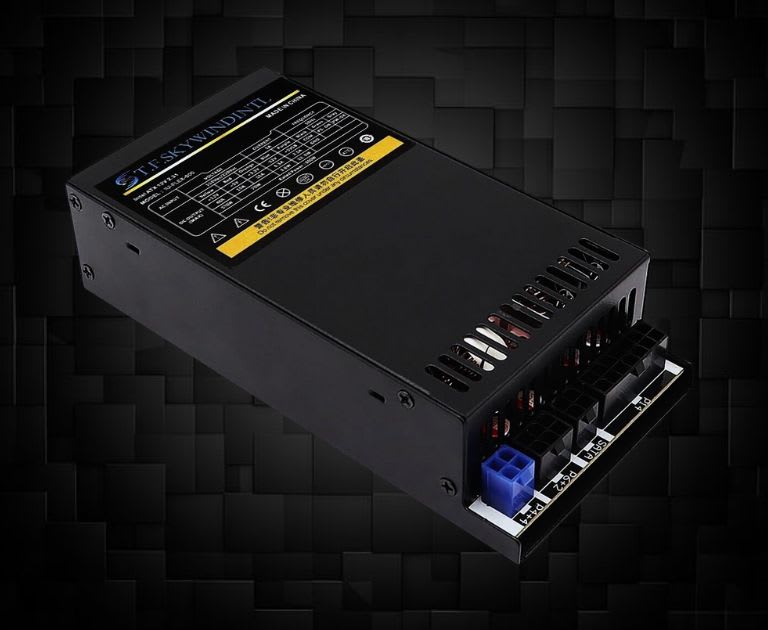
Perks of Modular PSU
- Has better cable management and reduces clutter.
- Modular power supply improves air flow within the system.
- Reduce cable bulk and offers flexibility to remove or add cables.
Flaws of Modular PSU
- If not handled properly they can be prone to damage.
- Can be tricky to install, especially for users unfamiliar with cable options.
- Quality variations can impact performance and reliability.
Ranking the All PSU Options for Mini PCs
Here’s a breakdown of the top four PSU types used in mini computer setups, ranked by overall reliability, performance, and practicality.
Modular PSU in MIni Computer
Reliability: ★★★★★
Modular PSUs top the list for their flexibility, efficient power delivery, and excellent build quality. Though they are usually larger than Pico or external options, SFX and other compact modular variants are available for mini PCs. They’re as reliable as conventional desktop PSUs and offer great thermal performance and easy cable management.

Compact PSU in Mini Computer
Reliability: ★★★★★
Designed specifically for small form factor builds, compact PSUs deliver solid performance while fitting in tight spaces. They're efficient, quiet, and very dependable, making them a favorite in many mini ITX systems. High-quality models rival the performance of full-sized PSUs.

Pico Power Supply in Mini PC
Reliability: ★★★★★
Pico PSUs are ultra-small and efficient for low-power builds like HTPCs or embedded systems. They're great for fanless or ultra-quiet setups. However, they usually require an external power brick and aren't ideal for high-performance systems, which slightly lowers their reliability under heavy loads.

External Power Supply Unit in Mini PC
Reliability: ★★★★★
External PSUs (like power bricks) are convenient and space-saving, often used in ultra-compact mini PCs. While they’re good for portability and low-power devices, they generally offer less flexibility and thermal control compared to internal units. Reliability depends heavily on the quality of the adapter.

Are Mini PC PSUs as Reliable as Conventional Desktop PSUs?
Yes when chosen correctly, mini PC PSUs can be just as reliable as conventional desktop power supplies. The key lies in matching power requirements, using quality brands, and ensuring proper ventilation. Modular and high-end compact PSUs in particular can offer the same level of performance and stability as full-sized units, making them perfectly suitable for long-term use.
Frequently Asked Questions
Are mini PC power supplies reliable enough for daily use?
For their intended workloads, yes. The external bricks shipped with most mini PCs are adequately specified for the hardware inside them. Problems appear when people add power-hungry peripherals, external drives or an eGPU without recalculating the load, at which point the supply becomes the weakest part of the system.
Which mini PC PSU type is best?
External bricks are the most practical for genuinely small chassis, since they move the heat outside the case. Modular units are the best choice where the case has room, because the cable management improves airflow. Pico PSUs are the most compact but the least tolerant of load spikes, and are best kept to low-power builds.
How many watts does a mini PC need?
Most mini PCs draw between 35W and 90W under load, and the supplied brick is usually sized with modest headroom. If you are calculating for a full-size system instead, our guide to how many watts a gaming PC actually needs walks through the real figures rather than the inflated recommendations.
My PC shuts down under load. Is the PSU the cause?
Often, but not always. A supply that cannot sustain peak draw will cut out under load and behave perfectly at idle, which is a distinctive signature. Thermal shutdown looks similar from the outside. We separate the causes in why your PC shuts down while gaming.
Can a cheap power supply cause coil whine?
It can make it worse. Poor ripple suppression puts more current variation through the inductors, which is what produces the noise. It is rarely the sole cause, and swapping supplies is an expensive experiment — see GPU coil whine for the steps that work before that one.
Does the power supply affect network stability?
Indirectly. A supply operating at its limit can cause resets that take the network interface down with it, which looks like a connectivity fault. Our guide to mini PC internet connections covers the networking side, and how much a gaming PC costs covers where the supply should sit in a build budget.
Sources
- XP Power, Power Supply Efficiency and Form Factor Guidance, retrieved 2026-08-20, https://www.xppower.com/
- Wikipedia, Power supply unit (computer), retrieved 2026-08-20, https://en.wikipedia.org/wiki/Power_supply_unit_(computer)
- Tom's Hardware Forum, How long can a power supply unit last?, retrieved 2026-08-20, https://forums.tomshardware.com/threads/how-long-can-a-power-supply-unit-last.3676916/
- Puget Systems Labs, Puget Systems Most Reliable Hardware of 2025, retrieved 2026-08-20, https://www.pugetsystems.com/labs/articles/puget-systems-most-reliable-hardware-of-2025/