A budget gaming PC build under $1000 is still possible in 2026, but only if you accept 16GB of memory and an 8GB graphics card. The cheapest 32GB DDR5 kit in the US now sells for $359, and none can be found below $375 at most retailers (Tom's Hardware, 2026). That single line item eats a third of the budget.
Most "under $1000" parts lists still circulating online quote 32GB of DDR5 at $110. Those numbers are roughly a year stale. This guide uses mid-2026 street prices, shows the arithmetic honestly, and tells you the one scenario where buying a prebuilt genuinely beats building.
Note
Key Takeaways
- 16GB DDR5 now costs around $240, up from under $100 a year earlier — it is the line item that broke the budget build.
- A current-gen $1,000 DIY build lands at roughly $1,050-$1,100 in practice. Treat $1,000 as a target, not a ceiling.
- The RX 9060 XT 8GB at $379 is the sensible GPU here; the 16GB version costs $459 and blows the budget.
- Prebuilts are genuinely competitive in 2026. One CyberPowerPC config sells for $1,099 against $1,322 in equivalent parts (PC Gamer, 2026).
- Memory relief is not expected until at least Q4 2027, so waiting is not a strategy.
Can You Still Build a Gaming PC for Under $1000 in 2026?
Yes, at 1080p with 16GB of RAM and an 8GB GPU — but the margin is thin. Component prices have climbed across memory, storage and graphics simultaneously, and IDC expects average PC prices to rise by up to 8% during 2026 because of the memory shortage (Tom's Hardware, 2026).
The market has noticed. A 2026 survey found 60% of PC gamers have no plans to build a new PC within the next two years, with the AI-driven pricing crunch cited as the reason. That is not a small dip in sentiment; it is the enthusiast market pausing.
The Parts List
| # | Component | Recommendation | Mid-2026 Price |
|---|---|---|---|
| 1 | CPU | AMD Ryzen 5 9600X | $182-210 |
| 2 | GPU | AMD Radeon RX 9060 XT 8GB | $379 |
| 3 | Memory | 16GB DDR5-6000 CL30 | $240 |
| 4 | Motherboard | B650, AM5 | $120-140 |
| 5 | Storage | 1TB PCIe 4.0 NVMe | $80-95 |
| 6 | PSU | 650W 80+ Gold | $75-85 |
| 7 | Case | Mesh-front mid-tower | $65-75 |
| 8 | Cooler | Bundled Wraith Stealth | $0 |
| Total | ~$1,055 |
That total assumes you catch the Ryzen 5 9600X near its discounted $182 rather than its $279 list price. At list, you are at $1,150.
Why Did RAM Break the Budget Build?
Samsung, SK Hynix and Micron redirected fab capacity toward HBM memory for AI datacentres, which pays far better than consumer DDR5. Kits that routinely sold under $100 a year ago now fetch upwards of $240 for 16GB (Tom's Hardware, 2026).
The scarcity is not just about price. Cheaper 32GB kits now vanish from retailer listings within seconds of appearing, which makes "wait for a deal" an unreliable plan.
Take 16GB and Move On
At this budget, 32GB costs an extra $120-135 that is better spent on the GPU. 16GB remains sufficient for the overwhelming majority of 1080p titles in 2026.
Buy It as One Kit
Two matched 8GB sticks in a single kit. Mixing a later-bought stick invites instability, and prices are forecast to rise rather than fall.
Do Not Skip EXPO
A DDR5-6000 CL30 EXPO kit running at its rated speed is worth real frames on Ryzen. Leaving it at the JEDEC default 4800 throws away performance you paid for.
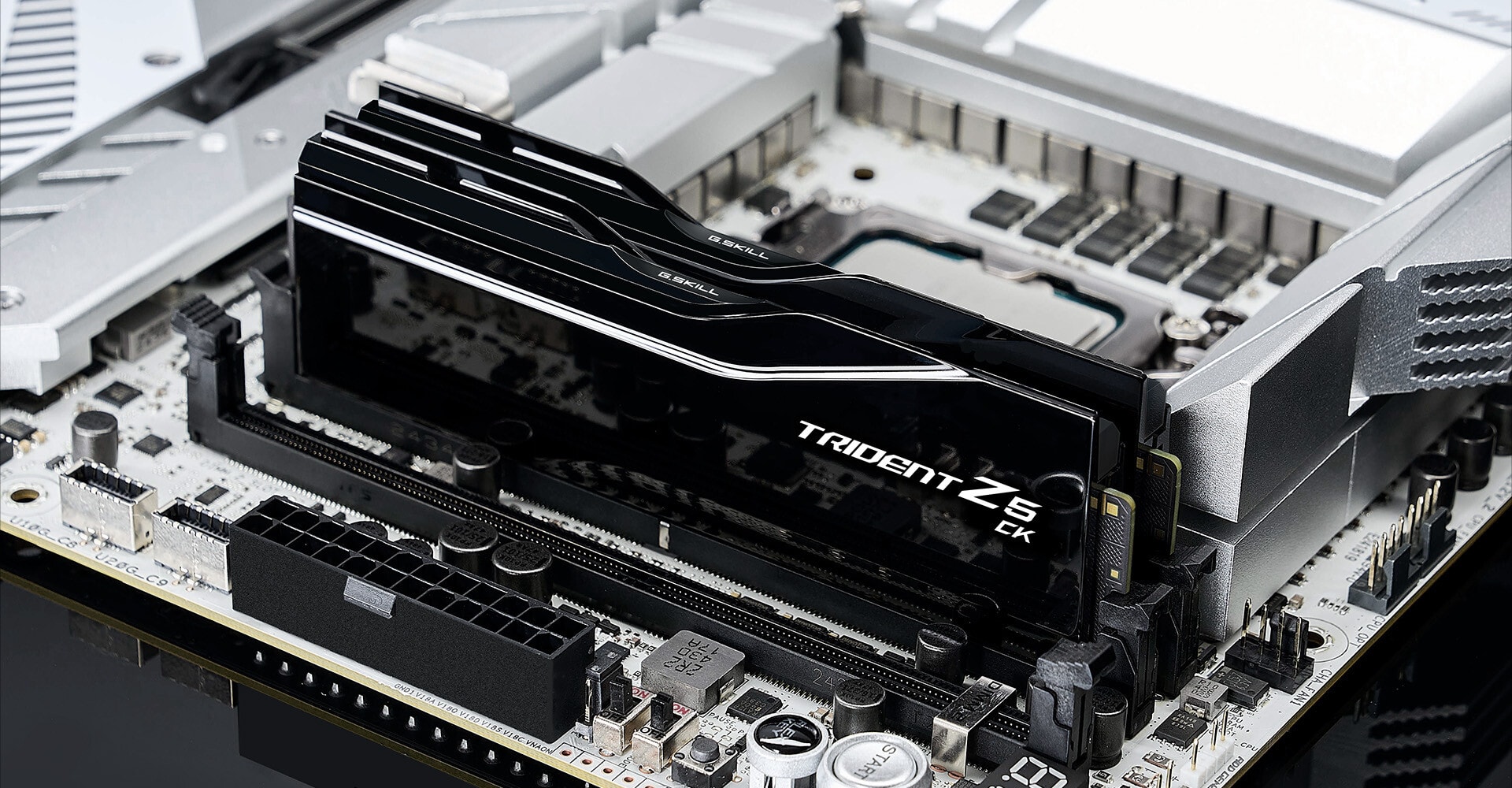
Relief is distant. Memory shortages across DDR5 and DDR4 are forecast to last until at least Q4 2027, and SK hynix has warned that manufacturing constraints could persist toward 2030 (Wccftech, 2026). If you need a machine this year, buy this year.
There is one small mercy: Tom's Hardware reported in mid-2026 that the memory price surge has begun to cool as consumers hit an affordability limit. Cooling is not falling. Prices are still climbing, just less steeply.
Which GPU Belongs in a $1000 Build?
The RX 9060 XT 8GB at roughly $379 is the right call at this budget, because its 16GB sibling now carries a $459 midpoint — the highest that card has ever sold for (Tom's Hardware, 2026). That $80 gap is the difference between fitting the budget and missing it.

Nvidia's equivalents sit awkwardly. The RTX 5060 Ti 8GB runs $359-370, while the 16GB model has drifted to a $579 midpoint. On paper the 8GB Nvidia card is the cheapest current-gen option here.
| # | GPU | Mid-2026 Street | Verdict for a $1000 build |
|---|---|---|---|
| 1 | RX 9060 XT 8GB | $379 | Best balance — the pick |
| 2 | RTX 5060 Ti 8GB | $359-370 | Fine if you want DLSS |
| 3 | RX 9060 XT 16GB | $459 | Better card, wrong budget |
| 4 | RTX 5060 Ti 16GB | $579 | Out of scope entirely |
The 8GB caveat: Eight gigabytes of VRAM is genuinely tight in 2026, and a handful of recent titles will force you down a texture preset at 1080p. If that bothers you, read our breakdown of how much VRAM you actually need for gaming before committing. The honest position is that 8GB is a compromise you are making because memory prices forced it, not because it is ideal.
For a wider view of what each tier buys right now, our best budget GPU guide for 2026 compares the same cards under load.
Should You Just Buy a Prebuilt Instead?
In 2026, quite possibly — and that is a genuinely new answer. One CyberPowerPC Gamer Xtreme configuration sells for $1,099.99 against $1,322.80 for the equivalent parts bought individually, a gap of more than $200 in the prebuilt's favour (PC Gamer, 2026).
The mechanism is boring but decisive: system integrators buy memory on long contracts negotiated before the spike. You buy at spot price. Tom's Hardware went as far as advising that shoppers who mainly need RAM should consider a prebuilt or a laptop instead of loose modules.
Build If You Already Own Parts
A working PSU, case, or SSD carried over from an old machine tilts the maths straight back to DIY. Reuse is the cheapest component in any build.
Buy If You Need Everything
Starting from nothing, at exactly this budget, a prebuilt frequently wins on price today. That was not true in 2024.
Check the Boring Parts
Prebuilt savings usually come out of the PSU, the case airflow, and the SSD. Those are the parts you will replace first, so price the upgrade in before you compare.
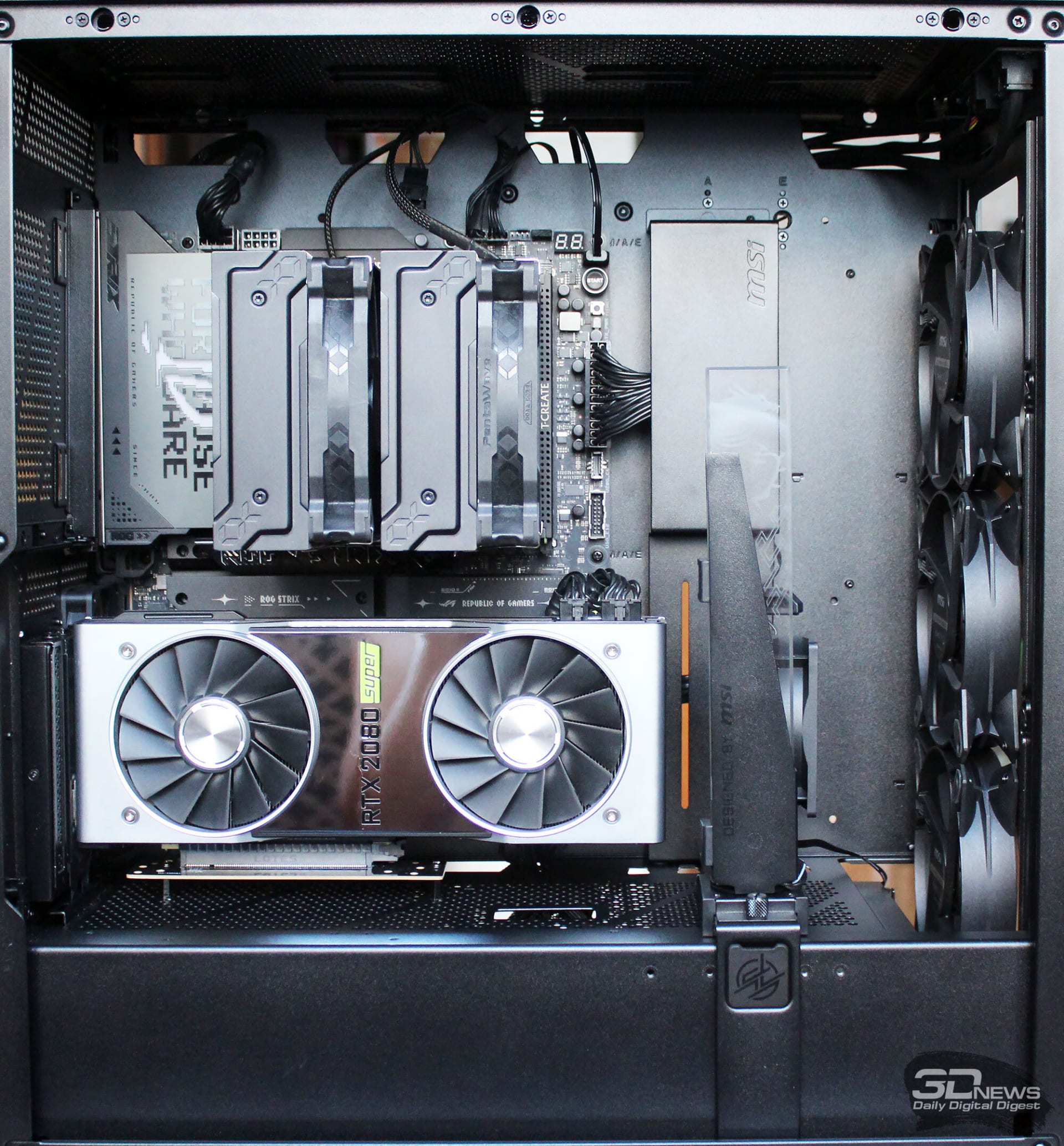
Some vendors have even started shipping prebuilts without RAM installed, letting buyers supply their own. That is a strange sight on a retail shelf, and a good measure of how distorted the market has become.
Where Can You Cut Without Losing Frames?
Cut everywhere except the GPU. Graphics still governs frame rate more than any other component, and at this budget it deserves 35-40% of the total spend.
- Use the bundled cooler. The Ryzen 5 9600X is a 65W part. Its Wraith Stealth handles it. That is $35 saved for zero frames lost.
- Take a B650 board, not B850. PCIe 5.0 to the graphics slot is irrelevant to a card this class. Save $40.
- 1TB, not 2TB. NAND prices rose alongside DRAM. Add the second drive next year when a single game install stops fitting.
- Skip the RGB tax. Plain black kits and non-lit fans cost meaningfully less for identical performance.
- Do not cut the PSU. A 650W 80+ Gold unit from a known brand is the one place false economy actually destroys hardware — see why PCs shut down mid-game.

What Performance Should You Expect?
This configuration targets 1080p at high settings, 60-100 FPS in most current titles, with esports games running far above that. It is a 1080p machine that will manage 1440p in older or well-optimised games.
The Ryzen 5 9600X is a 6-core, 12-thread Zen 5 chip with a 5.4GHz boost and a 65W TDP, and it posts strong average frame rates in CS2 and Doom Eternal (Tom's Hardware, 2026). It is not the bottleneck at this GPU tier.

Averages hide the part that actually feels bad, though. If the game stutters despite a healthy FPS counter, the problem is usually frame pacing rather than raw throughput — our guide to 1% lows explains what to measure instead.
Full Spec Sheet
| # | Item | Detail |
|---|---|---|
| 1 | Target resolution | 1080p high, 60-100 FPS |
| 2 | Socket | AM5 |
| 3 | CPU | Ryzen 5 9600X, 6C/12T, 65W |
| 4 | GPU | RX 9060 XT 8GB |
| 5 | Memory | 16GB DDR5-6000 CL30 EXPO |
| 6 | Storage | 1TB PCIe 4.0 NVMe |
| 7 | PSU | 650W 80+ Gold |
| 8 | Cooler | Bundled air cooler |
| 9 | Realistic total | $1,055-$1,150 |
| 10 | Upgrade headroom | CPU to Ryzen 9000X3D on same board |
What Is the Upgrade Path?
AM5 is the reason to accept the compromises above. AMD has committed to the socket well beyond 2026, so the CPU can be replaced without a new motherboard — and an X3D chip is the single highest-impact upgrade this platform accepts.
Order of operations when budget allows:
- Add 16GB more memory once DDR5 prices ease, taking you to 32GB.
- Move to an X3D CPU for the cache-sensitive games where it matters most.
- Replace the GPU last, when 8GB genuinely stops being enough.
If you are weighing whether the memory upgrade is worth it at all, we work through that question in is 32GB of RAM overkill for gaming.
Frequently Asked Questions
Is a $1000 gaming PC still worth it in 2026?
Yes, if you play at 1080p. The machine described here handles current titles at high settings comfortably, and AM5 gives it a genuine upgrade path. What has changed is the expectation: $1,000 in 2026 buys roughly what $750-800 bought in 2025, entirely because of memory and storage inflation rather than any drop in GPU value.
Should I buy 16GB or 32GB of RAM for a budget build?
Take 16GB now. At current prices, 32GB adds $120-135, which is better spent on a stronger graphics card at this budget. 16GB remains adequate for the vast majority of 1080p gaming in 2026, and a second kit can be added later once DDR5 pricing normalises — provided you buy a board with four DIMM slots.
Is 8GB of VRAM enough for 1080p gaming?
For most games, yes, but it is tight. A growing number of 2026 titles push past 8GB at maximum texture settings even at 1080p, forcing you down a preset. The RX 9060 XT 8GB remains the pragmatic choice under $1,000 — just budget for its 16GB sibling if you plan to keep the card past three years.
Is it cheaper to build or buy a PC in 2026?
Buying can genuinely be cheaper right now, which reverses the usual advice. System integrators secured memory on contracts signed before the AI-driven price spike, so prebuilts at the $1,000-1,200 mark frequently undercut the equivalent parts list. Building still wins if you are reusing a case, PSU or drives from an existing machine.
Will PC part prices come down soon?
Not soon. Memory shortages are forecast to run until at least Q4 2027, and SK hynix has warned about constraints persisting toward 2030. Prices have begun to cool in the sense that they are rising more slowly, but no analyst is currently forecasting a return to 2024 levels. Waiting costs you a year of gaming for an unlikely discount.
Should You Build This?
Build it if you play at 1080p, you already own a monitor and peripherals, and you want a machine you can upgrade rather than replace. The AM5 socket and a decent power supply are what make this configuration worth $1,000 in a year where $1,000 does not go far.
Do not build it if you are starting from absolutely nothing and can find a prebuilt at $1,099 with equivalent internals. In 2026, that is not a defeat — it is just arithmetic.
If your budget stretches further, the step up is meaningful: our 1440p gaming PC build guide covers the same market at roughly double the spend, and what a gaming PC actually costs breaks down every tier. For expectations about how long this machine stays viable, see how long a gaming PC lasts.
Component photography courtesy of the respective manufacturers and outlets credited above, used for editorial coverage. All prices are mid-2026 US street prices and will move.
Sources
- Tom's Hardware, 32GB of DDR5 now costs $375 minimum, retrieved 2026-07-27, https://www.tomshardware.com/pc-components/ddr5/32gb-of-ddr5-now-costs-usd375-minimum-ai-shortage-continues-to-squeeze-pc-building
- Tom's Hardware, US RAM crisis hits boiling point as AI mania wipes out all 32GB DDR5 kits under $359, retrieved 2026-07-27, https://www.tomshardware.com/pc-components/ram/us-ram-crisis-hits-boiling-point-as-ai-mania-wipes-out-all-32gb-ddr5-kits-under-usd359-cheaper-kits-vanish-from-shelves-within-seconds-of-listing
- Tom's Hardware, IDC expects average PC prices to jump by up to 8% in 2026, retrieved 2026-07-27, https://www.tomshardware.com/tech-industry/idc-expects-average-pc-prices-to-jump-by-up-to-8-percent-in-2026-due-to-crushing-memory-shortages-some-vendors-already-selling-pre-builts-without-ram
- Tom's Hardware, GPU price tracking 2026, retrieved 2026-07-27, https://www.tomshardware.com/pc-components/gpus/lowest-gpu-prices-tracking
- Tom's Hardware, AMD Ryzen 5 9600X and Ryzen 7 9700X Review, retrieved 2026-07-27, https://www.tomshardware.com/pc-components/cpus/amd-ryzen-5-9600x-cpu-review
- PC Gamer, Even in a global memory crisis you can get a whole PC gaming setup on the cheap if you go pre-built, retrieved 2026-07-27, https://www.pcgamer.com/hardware/gaming-pcs/even-in-a-global-memory-crisis-you-can-get-a-whole-pc-gaming-setup-on-the-cheap-if-you-go-pre-built/
- Wccftech, Memory shortages to last till at least Q4 2027, retrieved 2026-07-27, https://wccftech.com/memory-ddr5-ddr4-shortages-last-till-q4-2027-higher-prices-throughout-2026/