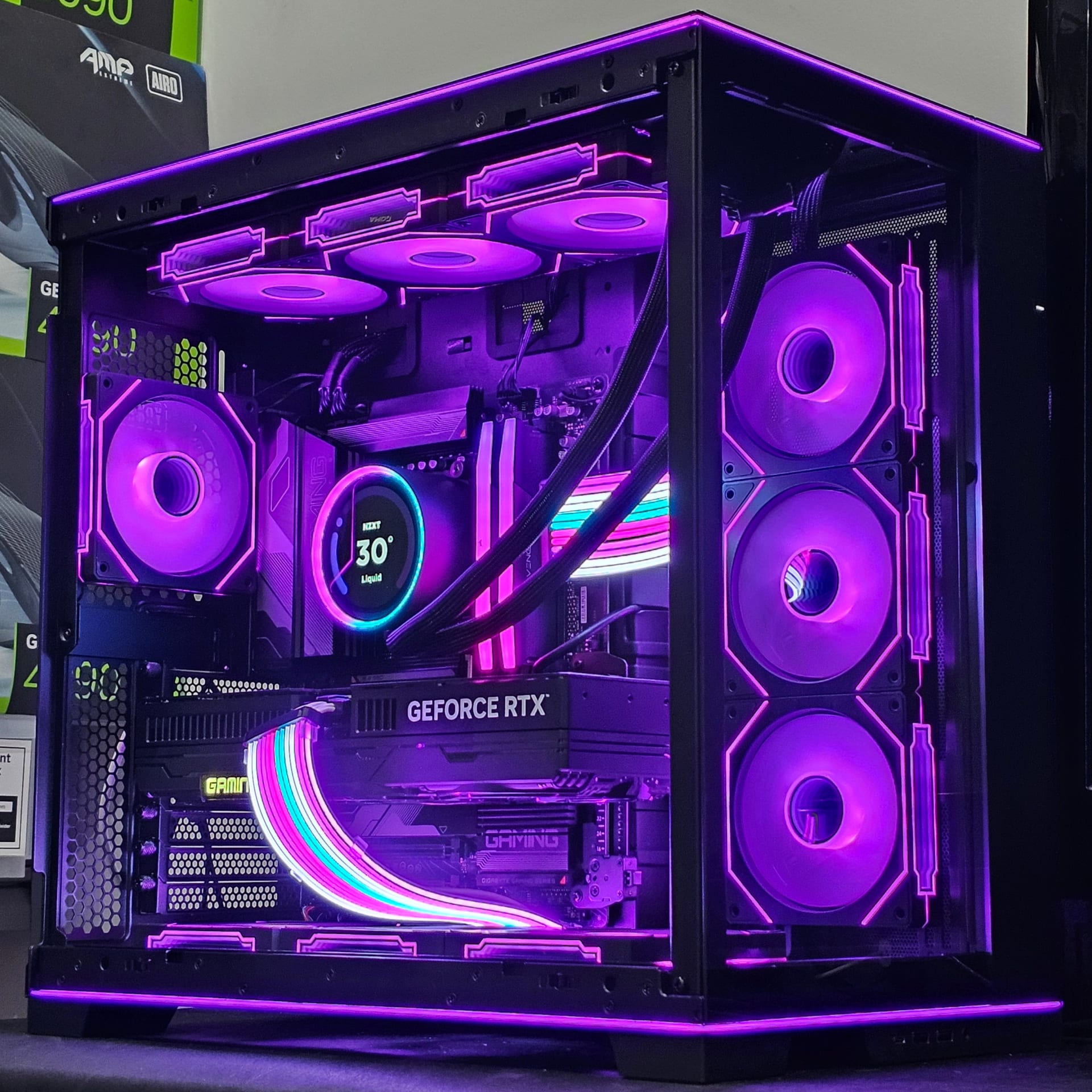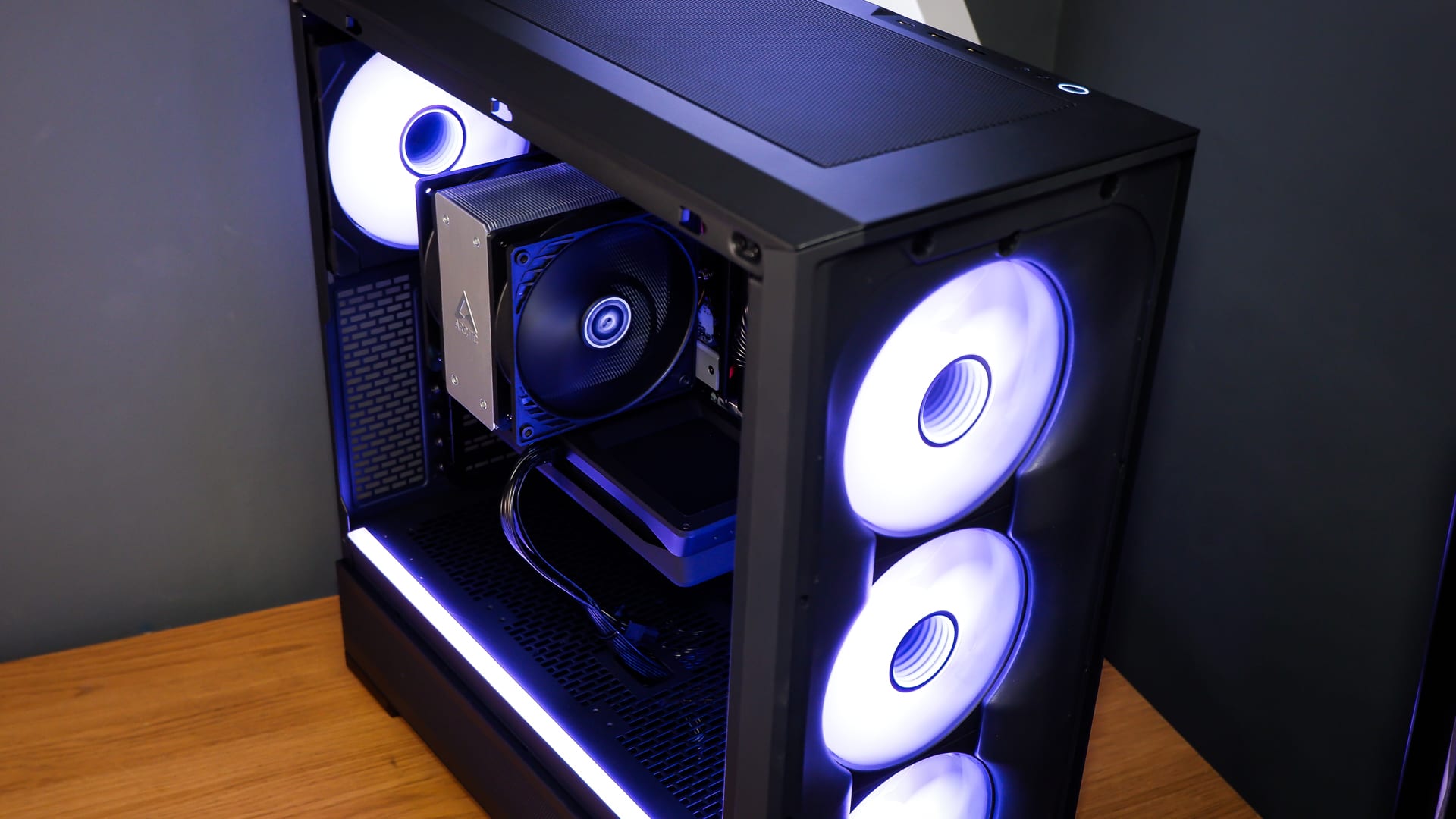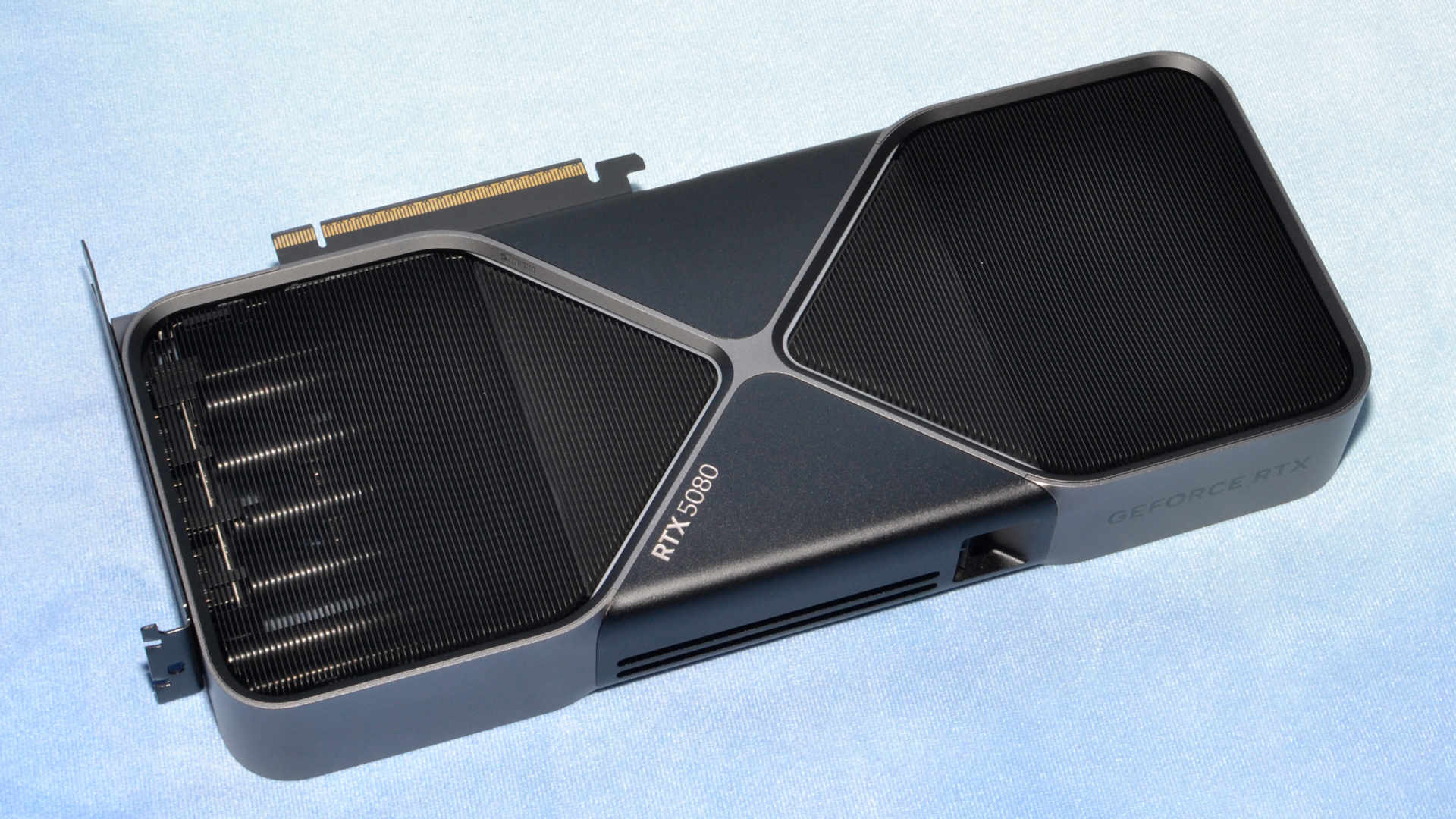
A 4K gaming PC build in 2026 lands at roughly $2,800, and the graphics card alone accounts for close to half of it. The RTX 5080 carries a $999 MSRP but trades at $1,249 across Walmart, Amazon and Best Buy in mid-2026 (Tom's Hardware, 2026). Nothing else in the parts list comes close to that line item.
The useful question is not what the dream build costs. It is which parts of a 4K build actually buy you frames at 3840x2160, and which are expensive habits carried over from 1440p advice. This guide separates the two, and includes a $2,300 configuration that gives up surprisingly little.
Note
Key Takeaways
- A current 4K build costs about $2,800; a value-oriented 4K build comes in near $2,300.
- The RTX 5080 sells for $1,249 against a $999 MSRP. The RTX 5090 rarely appears below $3,000, roughly 65% over its $1,999 MSRP.
- An undervolted RX 9070 XT hit 66 FPS in Cyberpunk 2077 at 4K Ultra, edging the RTX 5080's 65 FPS in the same test (TechSpot, 2026).
- At 4K the CPU matters less than at 1440p — but 32GB of RAM is no longer optional, and it now costs $375.
- Buy the monitor before the GPU. A 4K panel with no card is playable; a 4K card on a 1080p panel is wasted money.
What Does a 4K Gaming PC Cost in 2026?
Roughly $2,800 for a build that holds 60 FPS or better at native 4K with high settings. The bill is dominated by two components: an RTX 5080 at $1,249 and 32GB of DDR5 at $375 minimum, the latter driven by the AI-fuelled memory shortage (Tom's Hardware, 2026).
Two years ago that same machine would have been a $2,000 proposition. The GPU has not become dramatically faster; it has become dramatically more expensive, and the memory beside it has roughly quadrupled.
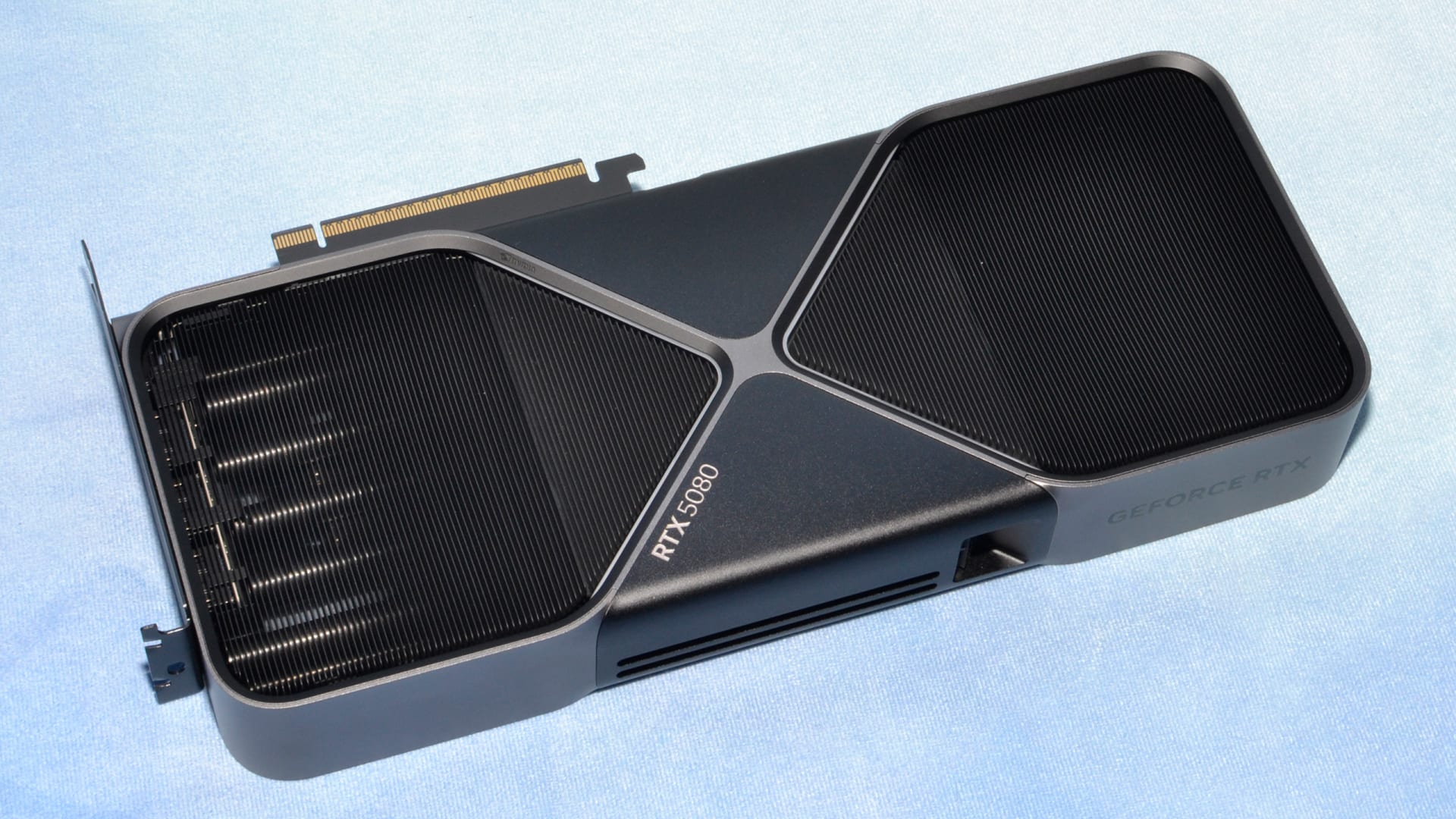
The Parts List
| # | Component | Recommendation | Mid-2026 Price |
|---|---|---|---|
| 1 | CPU | AMD Ryzen 7 9800X3D | $449 |
| 2 | GPU | Nvidia GeForce RTX 5080 | $1,249 |
| 3 | Memory | 32GB DDR5-6000 CL30 | $375 |
| 4 | Motherboard | B850 or X870, AM5 | $190-220 |
| 5 | Storage | 2TB PCIe 4.0 NVMe | $170-190 |
| 6 | PSU | 850W 80+ Gold, ATX 3.1 | $120-140 |
| 7 | Cooler | 360mm AIO or premium air | $100-130 |
| 8 | Case | High-airflow mid-tower | $110-130 |
| Total | ~$2,800 |
Is the RTX 5090 Worth It for 4K?
No, not at 2026 pricing. The RTX 5090 rarely sells below $3,000 and occasionally exceeds $4,000 against a $1,999 MSRP, putting street pricing around 65% above where Nvidia set it (TechSpot, 2026).
That premium buys a card that is meaningfully faster than the 5080, but not 140% faster. The 5090's 32GB of GDDR7 is genuinely useful for creative work and local AI models. For gaming at 4K, it is the worst value proposition on the shelf right now.
RTX 5080 — The Default
At $1,249 it is the cheapest card that handles native 4K at high settings without leaning on upscaling in most titles. Everything above it is priced for a different buyer.
RX 9070 XT — The Value Play
Around $740, and closer in raw raster performance than the price gap suggests. Ray tracing is where it gives ground.
RTX 5090 — Skip It
A 65% premium over MSRP for a card most 4K gamers will never saturate. Revisit if supply normalises.
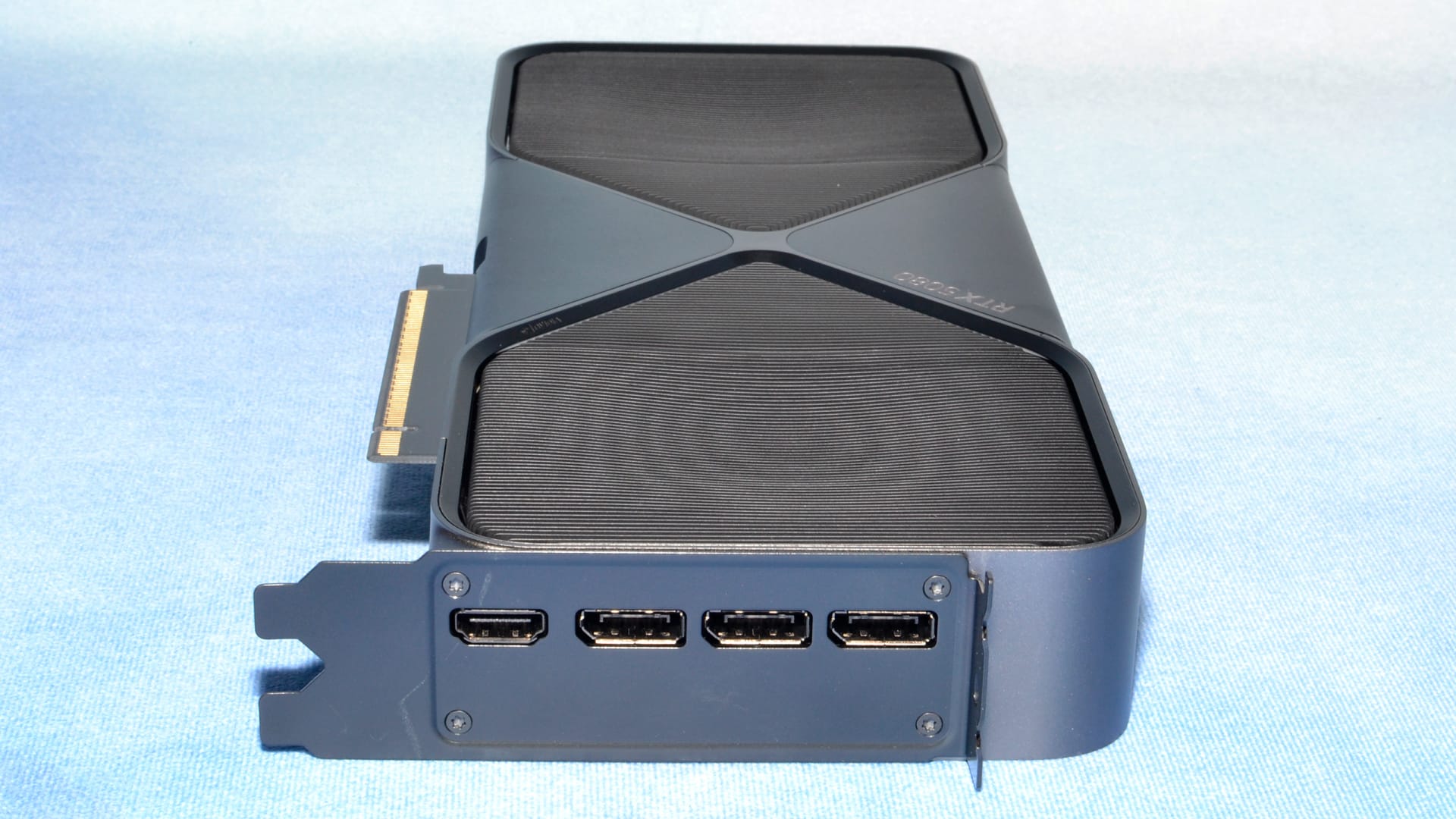
Supply is the real constraint. Tom's Hardware notes that higher-tier cards including the 5070 Ti and 5080 remain in poor supply at any reasonable price, because manufacturers are prioritising lower-VRAM models that consume less scarce memory.
Can You Build a 4K PC for Less?
Yes — swap the GPU and you save roughly $500 with far less performance loss than the price difference implies. An undervolted RX 9070 XT posted 66 FPS in Cyberpunk 2077 at 4K Ultra with ray tracing off, against 65 FPS for the RTX 5080 in the same comparison (Tom's Hardware, 2026).
That result comes with an asterisk the size of a building: it required undervolting, and it excludes ray tracing, where Nvidia keeps a clear lead. Treat it as evidence that the AMD card is closer than the sticker suggests, not as proof it wins.
| # | Component | Value 4K Build | Price |
|---|---|---|---|
| 1 | CPU | AMD Ryzen 7 9800X3D | $449 |
| 2 | GPU | AMD Radeon RX 9070 XT | $740 |
| 3 | Memory | 32GB DDR5-6000 CL30 | $375 |
| 4 | Motherboard | B650 or B850, AM5 | $170 |
| 5 | Storage | 2TB PCIe 4.0 NVMe | $180 |
| 6 | PSU | 850W 80+ Gold | $130 |
| 7 | Cooler | 240mm AIO | $100 |
| 8 | Case | Mesh-front mid-tower | $110 |
| Total | ~$2,254 |
That is a genuine 4K machine for $550 less. The compromise is ray-traced performance and DLSS, not raw resolution capability.
Does the CPU Still Matter at 4K?
Less than the internet insists, but it is not free either. At 3840x2160 the GPU is the bottleneck in almost every scenario, which compresses the gap between a mid-range CPU and a flagship. The Ryzen 7 9800X3D remains the recommendation because it costs $449, not $700, and it removes the CPU from the conversation entirely.

There is a real caveat. Upscaling changes the maths: running DLSS or FSR at 4K renders internally at 1440p or 1080p, which shifts load back onto the processor. If you intend to use upscaling constantly — and at 4K most people do — the CPU matters more than the "GPU-bound at 4K" shorthand suggests. Which DLSS and FSR versions each card supports also changed this year, as our AI upscaling news roundup covers.
Where the extra money goes instead: A weaker CPU saves perhaps $200. A weaker PSU saves $50 and risks the entire build. Our guide to why PCs shut down mid-game covers what undersized power delivery actually does under a 4K load, and it is not a graceful failure.
What About Memory and Storage?
32GB is the floor for a 4K build in 2026, and it is expensive. Consumer DDR5 pricing has been dragged upward by fab capacity shifting to HBM memory for AI datacentres, with shortages forecast to last until at least Q4 2027 (Wccftech, 2026).
Buy the 32GB as a single matched kit rather than planning to add more later. Prices are forecast to rise, and matched kits are the only ones guaranteed to run their rated EXPO profile together. We covered whether the jump is justified in is 32GB of RAM overkill for gaming — at 4K, the answer swung to no some time ago.
Storage deserves 2TB. Modern 4K texture packs are enormous, and NAND pricing has climbed alongside DRAM, so buying the larger drive now is cheaper than buying a second one in a year.
What Monitor Do You Actually Need?
Buy the panel first. A 4K build feeding a 1080p monitor is a $2,800 mistake, and it is a surprisingly common one.

- 4K at 144Hz is the target this build is designed around.
- HDMI 2.1 or DisplayPort 1.4+ is mandatory for 4K at high refresh — our HDMI vs DisplayPort comparison explains which port to use.
- HDR is worth having but is frequently misconfigured on Windows; see fixing washed-out HDR in Windows 11.
- Panel type over spec sheet. An OLED at 120Hz beats a mediocre IPS at 144Hz for almost everyone.
Full Spec Sheet
| # | Item | Detail |
|---|---|---|
| 1 | Target resolution | 3840x2160, high settings, 60+ FPS |
| 2 | Socket | AM5 |
| 3 | CPU | Ryzen 7 9800X3D, 8C/16T |
| 4 | GPU (primary) | RTX 5080, $1,249 street |
| 5 | GPU (value) | RX 9070 XT, ~$740 |
| 6 | Memory | 32GB DDR5-6000 CL30 EXPO, $375 |
| 7 | Storage | 2TB PCIe 4.0 NVMe |
| 8 | PSU | 850W 80+ Gold, ATX 3.1 |
| 9 | Cooling | 360mm AIO or premium air tower |
| 10 | Primary build total | ~$2,800 |
| 11 | Value build total | ~$2,254 |
Frequently Asked Questions
How much does a 4K gaming PC cost in 2026?
About $2,800 for a build using an RTX 5080 and a Ryzen 7 9800X3D, or roughly $2,254 if you substitute an RX 9070 XT. The graphics card and memory dominate the total: $1,249 and $375 respectively at mid-2026 street prices. Both figures are well above what the same components would have cost in 2024.
Is the RTX 5080 enough for 4K gaming?
Yes. The RTX 5080 handles native 4K at high settings in the large majority of current titles, and DLSS covers the demanding outliers. It is the cheapest card that makes native 4K comfortable rather than aspirational, which is why it anchors this build despite selling 25% above its own MSRP.
Do I need a Ryzen 7 9800X3D for 4K?
Not strictly. At native 4K the GPU is the limiting factor and a cheaper CPU loses little. The 9800X3D earns its place for two reasons: it costs $449 rather than flagship money, and it stops mattering the moment you enable upscaling, which renders internally at a lower resolution and shifts load back to the processor.
Is 32GB of RAM necessary for 4K gaming?
Yes, at this tier. 16GB is workable at 1080p but becomes a genuine constraint in 4K titles with large texture streaming budgets, especially with a browser and Discord running. At $375 for 32GB it is a painful purchase in 2026, but it is not the place to economise on a $2,800 machine.
Should I wait for prices to fall before building?
Probably not. Memory shortages are projected to run until at least Q4 2027, and GPU supply at the 5080 tier remains constrained because manufacturers are prioritising lower-VRAM models. There is no credible forecast pointing to meaningfully cheaper 4K components inside the next twelve months.
Should You Build This?
Build it if you already own or intend to buy a 4K high-refresh monitor, and you want native-resolution performance rather than heavy upscaling. At $2,800 this configuration is expensive by historical standards but honest about where the money goes — nearly half of it into one component.
Choose the $2,254 version if ray tracing is not a priority. The RX 9070 XT gets you to the same resolution for materially less, and the saved $550 covers most of a good monitor.
If that is more than you want to spend, the sensible step down is our 1440p gaming PC build guide, or the budget build under $1,000 at the other end. For a full picture of what each tier costs, see the average cost of a gaming PC, and how long a gaming PC lasts for how far this one should carry you.
Component photography courtesy of the respective manufacturers and outlets credited above, used for editorial coverage. Prices are mid-2026 US street prices and change frequently.
Sources
- Tom's Hardware, GPU price tracking 2026, retrieved 2026-07-27, https://www.tomshardware.com/pc-components/gpus/lowest-gpu-prices-tracking
- Tom's Hardware, Undervolted RX 9070 XT beats RTX 5080, retrieved 2026-07-27, https://www.tomshardware.com/pc-components/gpus/undervolted-rx-9070-xt-beats-rtx-5080-rx-9070-and-9070-xt-models-with-heavy-coolers-have-massive-oc-headroom
- Tom's Hardware, 32GB of DDR5 now costs $375 minimum, retrieved 2026-07-27, https://www.tomshardware.com/pc-components/ddr5/32gb-of-ddr5-now-costs-usd375-minimum-ai-shortage-continues-to-squeeze-pc-building
- TechSpot, Absurd GPU Pricing Update: Q1 2026 Edition, retrieved 2026-07-27, https://www.techspot.com/article/3088-gpu-pricing-q1-2026/
- TechSpot, Undervolted Radeon RX 9070 XT beats the RTX 5080 in real-world gaming benchmarks, retrieved 2026-07-27, https://www.techspot.com/news/107110-undervolted-radeon-rx-9070-xt-beats-rtx-5080.html
- Wccftech, Memory shortages to last till at least Q4 2027, retrieved 2026-07-27, https://wccftech.com/memory-ddr5-ddr4-shortages-last-till-q4-2027-higher-prices-throughout-2026/